Crafting Virgin Media’s home move experience
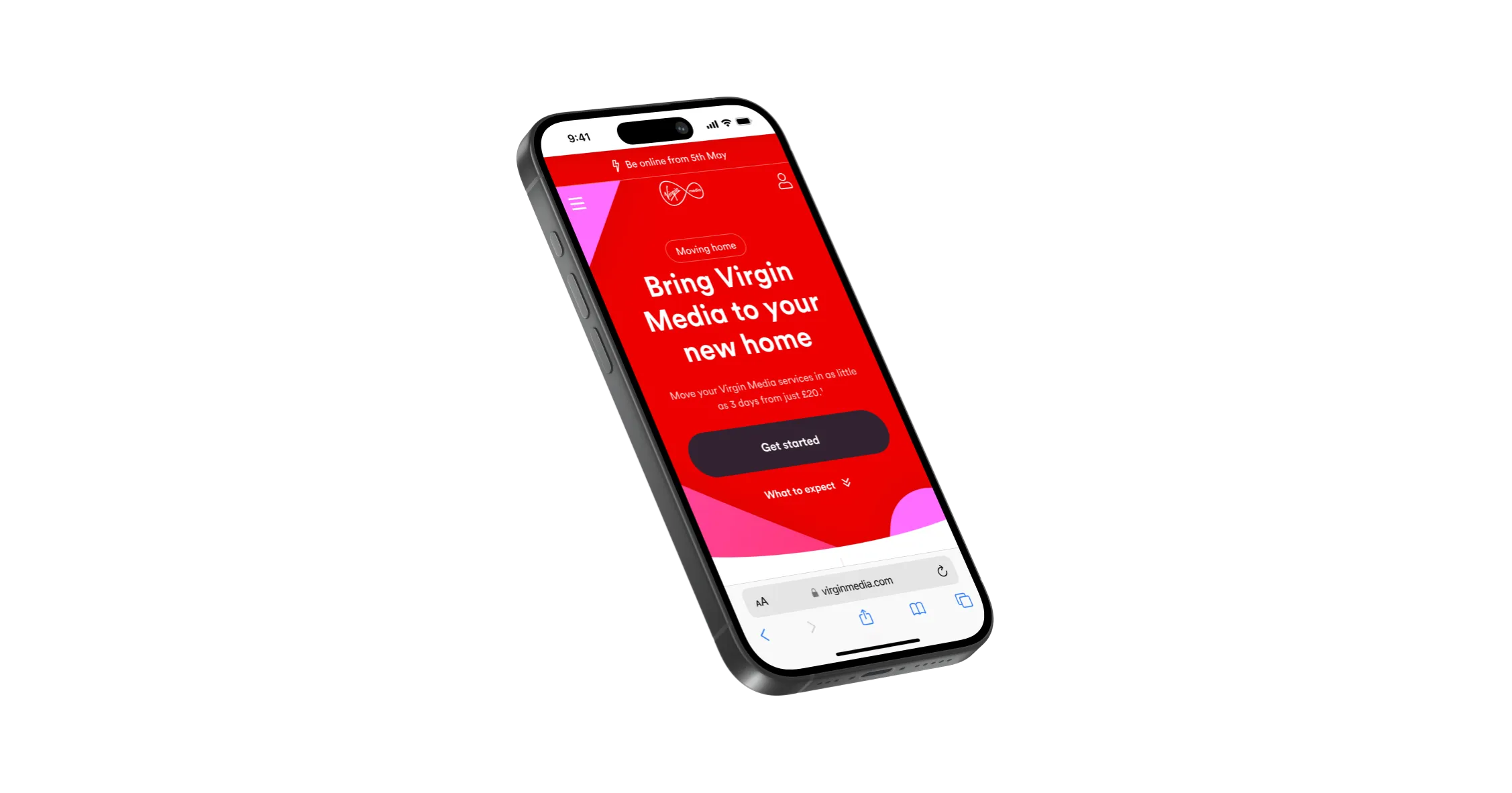
Award winner
Prototype (opens in a new tab)TL;DR
The challenge
Around 150,000 Virgin Media customers move home every year, and almost all of them had to phone or chat to an agent to move their services.
What I did
Ran a diary study, reshaped the home move page around three installation types, then designed a five-step journey to book the move online.
The outcome
Eligible customers now book in around ten minutes without an agent, with a 95.48% containment rate and a 4.6/5 ease-of-use score.
Methods used
- Diary study
- Optimisation
- Usability testing
- Information architecture
- Card sorting
- Basic usability test
A UX case study covering the evolution from an improved home move landing page to an end-to-end digital booking journey.
01 The challenge
Moving home is one of life’s most stressful experiences. Between coordinating finances, organising removals and managing countless practical arrangements, transferring broadband is another responsibility customers need to get right.
Virgin Media supports approximately 150,000 home movers every year, with customers traditionally relying on phone and live chat to arrange the transfer of their services. This created a significant opportunity to simplify the experience, reduce reliance on assisted channels and give customers greater control over their move.
The existing home move experience provided information about the process and allowed customers to check service availability at their new address. However, engagement was poor, customers weren’t reaching or consuming much of the content, and feedback suggested they weren’t finding the information they needed. Access was also restricted to signed-in customers.
I saw an opportunity to rethink the experience from the ground up: moving away from a fragmented, assisted-service process towards a more accessible, informative and ultimately self-service digital journey.
Virgin Media supports approximately 150,000 home movers every year
02 Understanding the customer
Alongside the first phase of the redesign, we ran a diary study with 15 participants to better understand the wider experience of moving Virgin Media services.
This was intentional. Rather than delay the initial improvements while conducting research, we could improve the existing landing page without changing the underlying booking journey, while gathering deeper insight into customers’ behaviours, expectations and concerns throughout their move.
Participants represented a mixture of ages, technical confidence and household types. All were existing Virgin Media broadband customers planning a house move, wanted to retain their services and were responsible for arranging the transfer.
Three recurring areas of concern emerged:
Apprehension about the process
Customers were concerned about how complicated and time-consuming the process might be, potential delays, additional costs, contractual implications and the possibility of losing their connection.
Worry about service performance
Customers wanted reassurance that their broadband speed, coverage and reliability would be as good as — or better than — at their previous property. Some were unsure how much they could trust the speeds being quoted.
Concerns about the new home
Customers were uncertain whether their existing equipment would work at the new property, whether they would need new hardware or an engineer visit, and what they would need to do to get connected.
The research also highlighted friction in the existing assisted channels. A few participants who attempted to arrange their move through live chat became frustrated by long response times or technical issues and ended up calling instead.
Together, these findings highlighted an opportunity to go beyond simply explaining the moving process. Customers needed clarity about what would happen, reassurance about their service and confidence that they could complete the move without unnecessary effort.
Customers needed clarity about what would happen, reassurance about their service and confidence they could complete the move
03 Structuring the experience around different moving needs
Customers don’t all move their Virgin Media services in the same way. The type of installation required at their new property determines what needs to happen, how long it takes and what support they need from us.
I used card sorting to help understand how customers perceived the different installation options and how best to organise the information. This helped shape three distinct Mover journeys:
- QuickStart: The most common option, where customers receive a kit and set up their services themselves.
- 1-man installation: An engineer visits to install the equipment and any required internal wiring, typically requiring at least seven days’ notice.
- 2-man installation: More complex work involving both external and internal installation, which can take two weeks or longer.
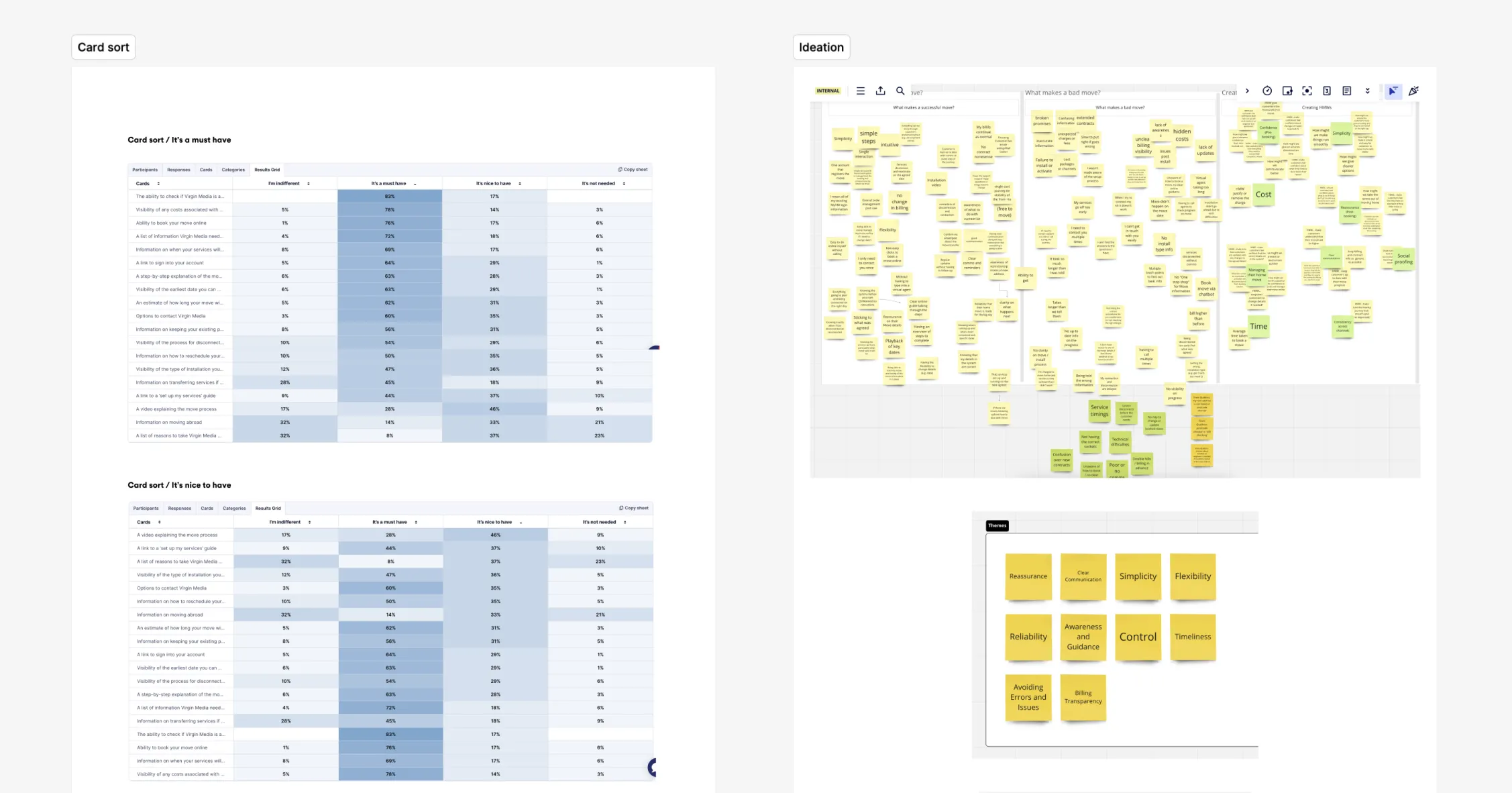
Rather than presenting every customer with the same information, the experience needed to make the relevant details clear for each type of move. This meant explaining what would happen, how long it would take and what customers needed to do next.
The aim was to reduce the amount of information customers had to work through, while giving them enough clarity to feel confident about their move.
04 Phase 1: Making the move experience more relevant
The first phase focused on improving the existing home move landing page and making it easier for customers to find information relevant to their move.
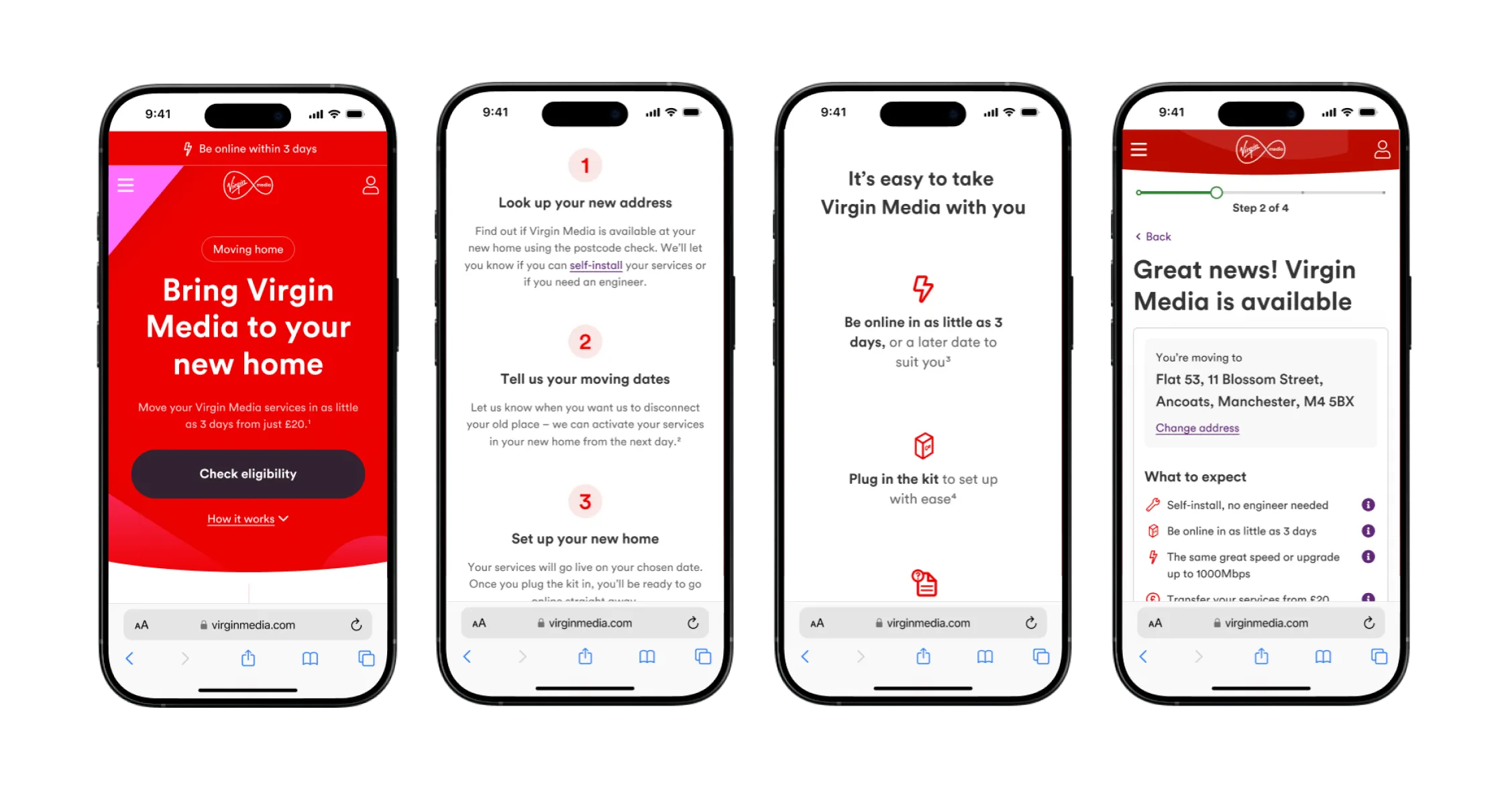
Previously, the page presented a broad overview of the process, regardless of the installation required. The new experience made the content more contextual, adapting the information shown based on the customer’s installation type.
- Setup expectations: A clearer explanation of what customers needed to do.
- Timescales: How long the move and installation process was likely to take.
- Installation details: An overview of what to expect from the relevant setup option.
I also removed the requirement for customers to sign in before accessing the experience, making it easier to get information and check service availability at a new address.
Digital move booking wasn’t included in this release because of a development delay. Customers still needed to use phone or live chat to complete their booking, but the improved landing page gave them a clearer starting point and helped direct them towards the next step.
05 Phase 1: Measuring the impact
Although the first release didn’t yet include digital booking, it delivered a measurable improvement in the performance of the home move journey.
Core metric
5.8%
Uplift in containment rate¹
¹from 72.8% to 77% during 27 March to 18 April
18%
Uplift in users clicking ‘Book Move’²
²from 61.14% to 72.12% of serviceable customers
Biggest increase in containment rate from a single release for Care
These results provided a strong case for continuing the work: improving the information customers received was valuable, but removing the need to switch to an assisted channel was the next opportunity.
06 Phase 2: Completing the digital journey
The second phase focused on taking customers beyond the information page and enabling them to book their move digitally, without needing to rely on phone or live chat.
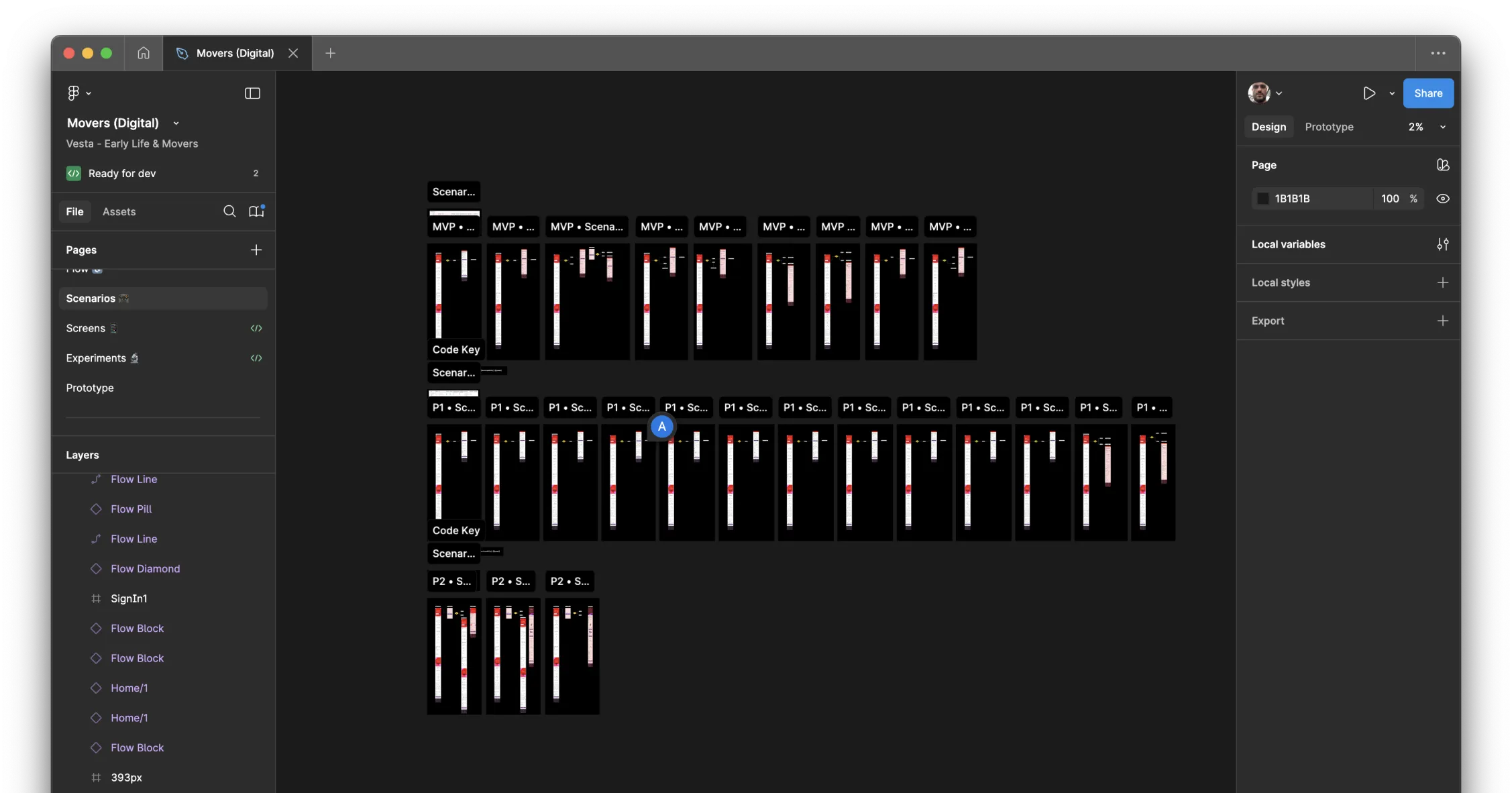
I worked on a five-step booking journey that gathered the information needed to arrange the transfer, while keeping the process as straightforward as possible.
Customers could provide:
- Their disconnection date at their current property.
- Their activation date at the new property.
- Any accessibility or additional support requirements.
- Agreement to the relevant terms and conditions, including early disconnection information where applicable.
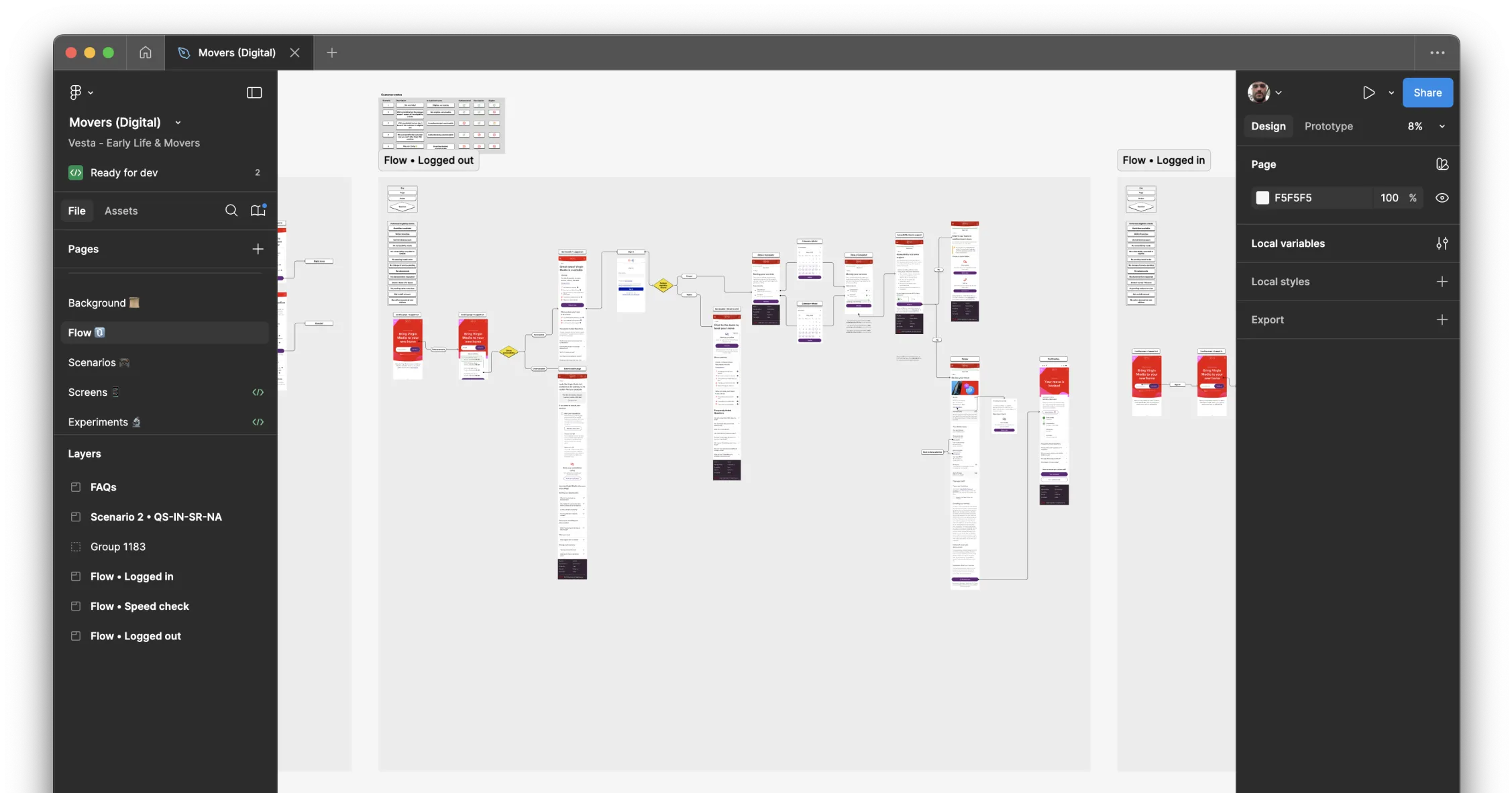
A key challenge was managing the eligibility checks required for both signed-in and signed-out customers. Rather than exposing this complexity to customers, most checks were handled in the background. Where a customer’s circumstances meant the move couldn’t be completed digitally, they were directed to live chat for support.
I ran multiple rounds of usability testing to refine the journey, identify points of friction and make sure customers understood what information was required at each stage.
The resulting journey allowed eligible customers to complete their move booking online in around ten minutes, replacing a process that had previously required contact with an agent.
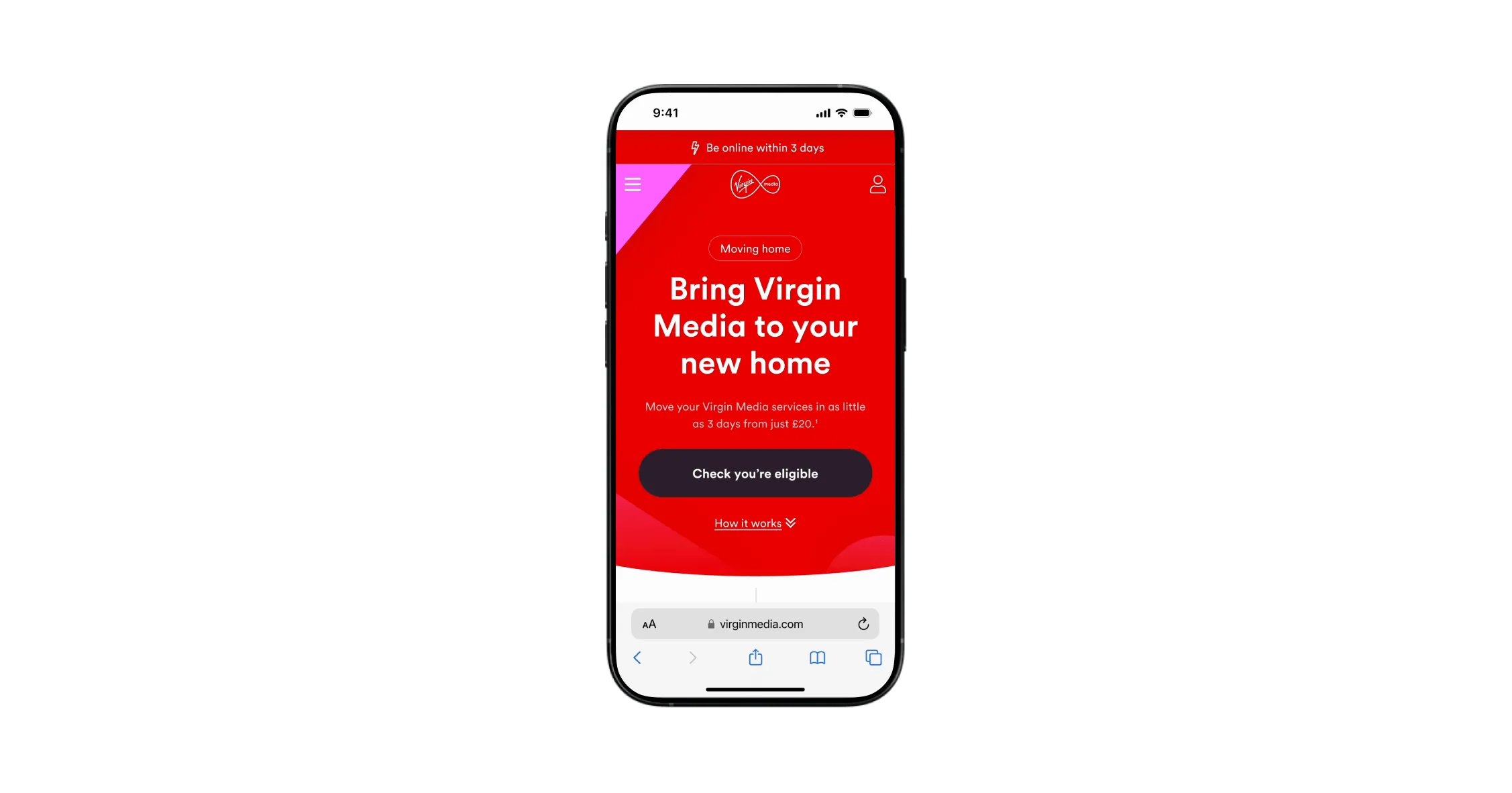
Eligible customers could book their move online in around ten minutes, without speaking to an agent
07 The impact
The completed digital journey delivered a significant improvement for customers who were eligible to complete their move online.
Core metric
95.48%
Containment rate¹
¹for eligible digital moves, exceeding the 90% target
4.6/5
Ease of use score²
²average score from customer feedback collected over three months
Reducing the amount of time taken to book a move by 28.6%³
³down to 10min 43s, from an average of 15 minutes over the phone
By making the journey more accessible, explaining the process more clearly and enabling eligible customers to complete their booking digitally, we reduced the need for assisted support and gave customers greater control over moving their services.
Monthly winner · Jul 24
Virgin Media Can Do Award
Recognised for improving the customer home-move experience.